
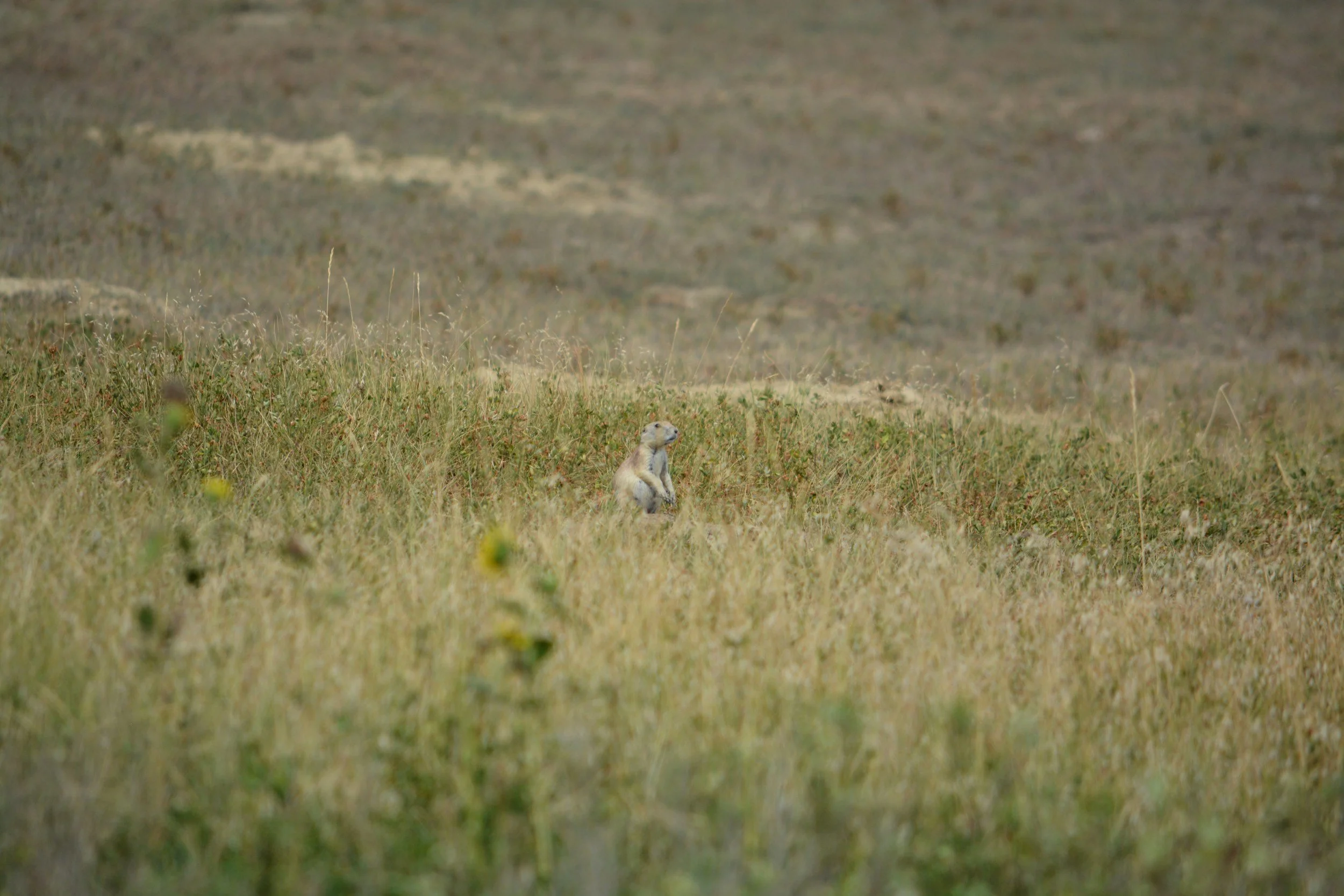
Prairie Dogs, Incredible Keystone Species!
Prairie dogs are one of North America's most important keystone species, playing a critical role in maintaining the health, diversity, and resilience of native grassland ecosystems. Like the keystone in an arch, their influence on the prairie is far greater than their size would suggest. Through their daily activities of grazing, digging, and maintaining extensive burrow systems, prairie dogs shape the landscape in ways that benefit countless other species of plants, animals, and insects.
Prairie dog colonies create a mosaic of habitat conditions across the prairie. Their grazing helps prevent grasses from becoming overly dense, encouraging the growth of a wider variety of native plants and wildflowers. This increased plant diversity supports pollinators such as native bees, butterflies, moths, and other beneficial insects. The open areas maintained by prairie dogs also provide important foraging habitat for many bird species, including mountain plovers, horned larks, and burrowing owls, which often nest directly within prairie dog colonies.
The burrows themselves serve as critical shelter for wildlife. More than 150 species have been documented using prairie dog burrows for nesting, denning, protection from predators, or escape from extreme weather. Burrowing owls raise their young in abandoned burrows. Cottontail rabbits, snakes, amphibians, insects, and numerous small mammals depend on these underground refuges. During periods of drought, heat waves, wildfires, and severe winter weather, prairie dog burrows can provide life-saving shelter for many species.
Prairie dogs are also a foundational prey species that help sustain healthy populations of predators. Coyotes, badgers, ferruginous hawks, golden eagles, and many other predators rely on prairie dogs as a food source. Most notably, prairie dogs are essential to the survival of the endangered black-footed ferret, one of North America's rarest mammals. Black-footed ferrets depend almost entirely on prairie dogs for both food and shelter, making the conservation of prairie dog colonies indispensable to the recovery of this iconic species.