
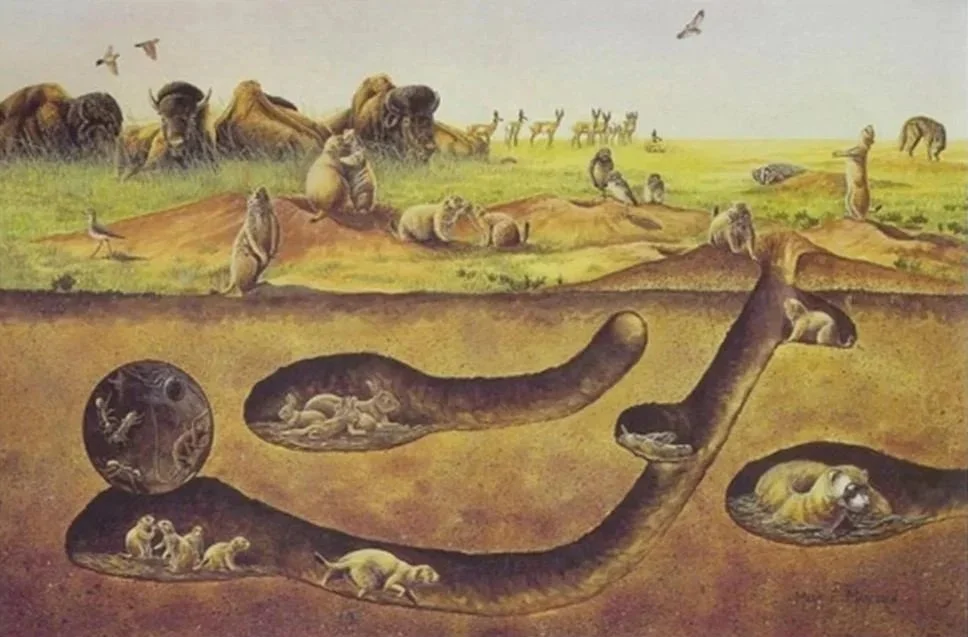
Prairie Dogs, Water Table Engineers!
Cross section of prairie dog burrow. (Drawing by Mark E. Marcuson, Courtesy of University of Nebraska-Lincoln, Department of Foresty, Fisheries and Wildlife.)
The benefits of prairie dogs extend below the surface as well. Their digging aerates compacted soils, improves water infiltration, and increases nutrient cycling. Prairie dog towns often capture and retain more rainfall than surrounding areas, helping grasslands remain productive during dry periods. By mixing soils and incorporating organic matter underground, prairie dogs contribute to healthier prairie ecosystems that are better able to withstand drought and other environmental stresses.
Research increasingly shows that prairie dog colonies can support higher levels of biodiversity than surrounding grasslands where prairie dogs have been removed. Areas occupied by prairie dogs often contain a greater abundance of insects, birds, mammals, and native plants. Their presence creates ecological opportunities for species that might otherwise struggle to survive in a more uniform landscape.
Despite their immense ecological value, prairie dogs have disappeared from much of their historic range due to poisoning, shooting, habitat loss, and development. The loss of prairie dogs often triggers a cascade of ecological consequences that ripple throughout the grassland community. Protecting prairie dogs is therefore about far more than conserving a single species—it is about safeguarding entire prairie ecosystems and the extraordinary web of life they support.
Healthy prairie dog colonies are a sign of a functioning prairie. By creating habitat, supporting biodiversity, enriching soils, sustaining predators, and providing shelter for countless animals, prairie dogs help ensure that North America's grasslands remain vibrant, productive, and ecologically rich for generations to come.