Playful Red Foxes in Mountain Meadow
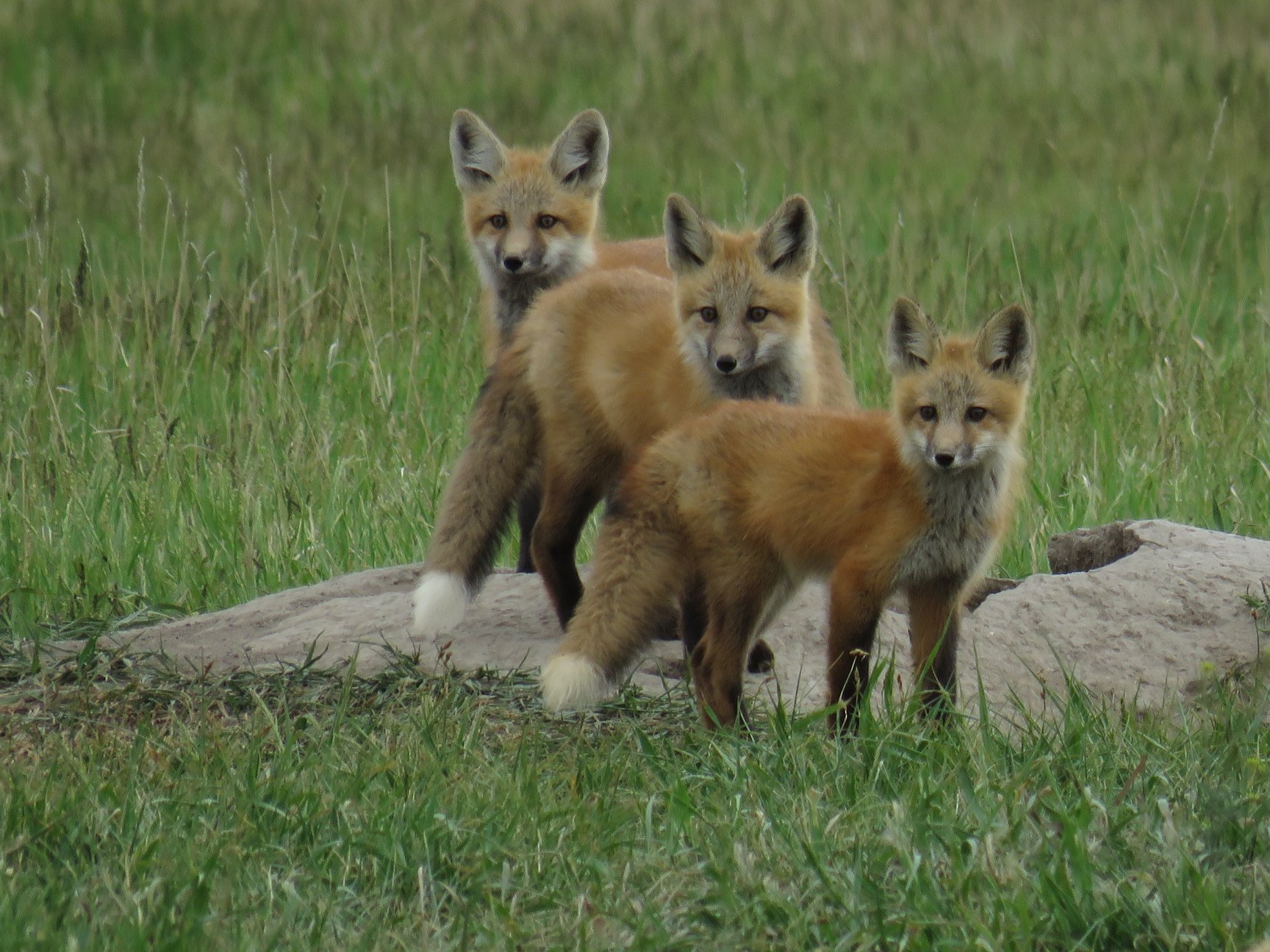
Many years ago along the banks of the Madison River in Montana, I stumbled into one of those rare wildlife moments that seem almost too perfect to be real.
Spread across a meadow were more than twenty red foxes, adults and kits scattered through the grass beneath the warm glow of a summer evening. The young foxes were consumed by play. They chased one another through the meadow, pounced on imaginary prey, and launched themselves over fallen logs with an energy that seemed impossible to exhaust. Everywhere I looked, another kit was tumbling, leaping, or discovering the world for the first time.
The adult foxes told a different story. While the youngsters played, the mothers were working tirelessly. They hunted continuously, returning with food only to head out again moments later. They looked almost worn thin by the demands of raising hungry kits, running the meadow from one end to the other in a relentless cycle of hunting and provisioning.
The evening itself was as memorable as the foxes. Golden sunlight poured across the meadow, illuminating every blade of grass. Above, a baby-blue sky stretched to the horizon, and a gentle breeze drifted through the valley. It was one of those perfect summer evenings when everything feels balanced and exactly as it should be.
I watched for more than half an hour, taking photographs whenever I could. But at some point I realized that seeing the foxes through a viewfinder was keeping me from fully experiencing what was unfolding around me. The camera, useful as it was, had become a barrier.
So I lowered it and set it aside.
For the rest of the encounter, I simply watched.
The photographs preserved a few moments, but the memory that stayed with me was something larger: the sight of multiple fox families living out their summer life in a Montana meadow, the endless energy of youth, the devotion of the mothers, and the feeling of standing quietly in the middle of a wild world that needed no audience and no record of its existence.